Prop 410, Wildlife and Habitat
Prop 410 Wildlife and Habitat Context
The Perkins Ranch property is part of the broader landscape of the Chino Valley and Big Chino Valley region, where wildlife habitat and movement are documented conservation considerations. The Arizona Game and Fish Department’s Arizona Wildlife Conservation Strategy identifies American pronghorn, mule deer and Rocky Mountain elk among species associated with plains and Great Basin grassland habitats and specifically identifies monitoring of pronghorn movements and wildlife connectivity in Big Chino Valley as a conservation activity.
The Arizona Game and Fish Department also identifies land-use changes and development as factors that can affect pronghorn populations and habitat. Its statewide pronghorn information notes that maintaining populations is affected by encroaching subdivisions and increasing highway construction.
The Perkins Ranch project involves approximately 390 acres and includes a privately owned and operated airfield and associated uses. The Town’s conditional-use permit establishes the approved land use but does not by itself establish the actual future effect of the project on individual wildlife species.
For that reason, this page distinguishes between documented wildlife information, project-specific information and potential impacts. Where a specific claim about a species or habitat effect is made, the supporting study, agency record or other source should be identified.
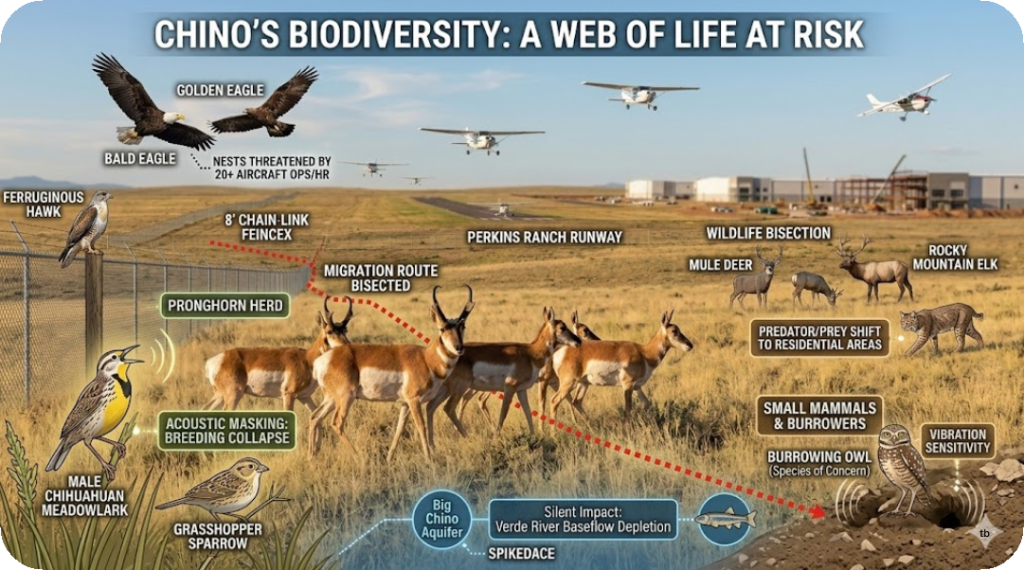
A Biodiversity Ecosystem Under Threat
This composite image visualizes the “domino effect”. It moves the conversation beyond just the “pronghorn fence” and onto a whole ecosystem threat.
- Acoustic Masking : The graphic visually explains “acoustic masking”—showing that the songs of the Chihuahuan Meadowlark are literally drowned out by the repetitive engine noise of the training aircraft. This is the visual key for ornithology-based arguments.
- Apex Predator Conflicts: We show that when we fence the large herbivores like mule deer and elk, we force apex predators like bobcats and mountain lions into surrounding neighborhoods. This turns the issue from “wildlife protection” to “public safety.”
- Silent Aquifer Impact: The inclusion of the Spikedace fish and the link to the Verde River baseflow highlights the “silent” impact of industrial water pumping at the Perkins Ranch site. See the Airport / Industrial Park Proposal for the broader development plan.
1. Birds of Prey (Raptors)
The Chino Valley and surrounding Big Chino Valley region provide habitat for a variety of birds and other wildlife. Wildlife information for the region includes raptors and other species associated with open grassland, riparian and other habitats.
The Arizona Game and Fish Department identifies wildlife connectivity and habitat conservation as important considerations when roads, development and other human structures are planned. Its wildlife-planning information notes that development can alter wildlife movement and that project planning can incorporate measures to reduce effects on wildlife and habitat. Arizona Game & Fish Department — Wildlife and Habitat Connectivity
Regional documentation also identifies bald eagles and other wildlife in the Chino Valley area. An Arizona Department of Transportation study for the State Route 89 corridor identified bald eagle, golden eagle and western burrowing owl as species with potential to occur in the vicinity of its Chino Valley study area.
The Perkins Ranch project involves approximately 390 acres and includes a proposed privately owned and operated airfield and associated uses. Changes in land use, construction activity, aircraft operations, lighting and other project features could be relevant to wildlife, but the actual effect on individual species depends on site-specific conditions and documented wildlife information.
For that reason, claims about nesting locations, aircraft-noise effects or changes in wildlife behavior should be supported by a project-specific biological study, agency record or other identified source rather than presented as established effects of Proposition 410.
2. Grassland Songbirds
Open grassland and other undeveloped areas can provide habitat for birds and other wildlife. The Arizona Important Bird Areas program notes that grasslands support diverse wildlife and that changes in habitat can change the bird species that use an area. Arizona Important Bird Areas Program — Grassland Habitat Guide
The broader Chino Valley and Big Chino Valley region contains important wildlife habitat. Regional conservation information identifies grasslands in the Big Chino, Little Chino and Williamson valleys as habitat for pronghorn and identifies wildlife-linkage areas within the region.
The Perkins Ranch proposal would change the use of approximately 390 acres and includes an airfield and associated development. Construction, buildings, roads, lighting and other changes to the landscape can alter the amount and character of habitat available to birds. The extent of any effect on particular bird species depends on the actual project footprint, existing habitat conditions and the results of appropriate biological surveys.
This page therefore does not assume that a particular bird species currently nests or breeds on the Perkins Ranch property unless that information is supported by a documented site-specific survey. Project-specific biological information should be used to determine which species are present and what habitat features may require consideration.
3. Elk, Deer and Pronghorn
Large mammals are an important part of the wildlife landscape surrounding Chino Valley and the broader Big Chino Valley region. Regional wildlife studies and conservation information identify pronghorn, mule deer and elk among the species that use the area’s grasslands and other habitats.
The Arizona Game and Fish Department specifically monitors pronghorn movements and wildlife connectivity in the Big Chino Valley. Its research on pronghorn movements used GPS data from collared animals to document seasonal movements and habitat use in the region.
Regional transportation and wildlife-planning documents also identify mule deer and elk among the large mammals occurring in the broader Chino Valley/Big Chino Valley landscape. Wildlife-linkage planning recognizes that roads, development and other barriers can affect movement between habitat areas.
The Perkins Ranch proposal involves approximately 390 acres and includes a privately owned and operated airfield and associated uses. Changes to land use, fencing, roads, buildings, lighting and other project features could affect wildlife movement or habitat use, depending on their location and design. The Town’s conditional-use permit establishes the approved airfield use but does not establish that a particular wildlife species will be displaced or harmed.
A project-specific assessment is therefore important when evaluating claims about pronghorn, elk, mule deer or other wildlife on the Perkins Ranch property. Regional evidence establishes that wildlife movement is an important consideration in the broader area; it should not be used by itself to claim a specific impact on this particular property.
4. Mountain Lions and Bobcats
Mountain lions and bobcats are among the wildlife species found in Arizona, and mountain lions in particular can move across very large areas. The Arizona Game and Fish Department notes that mountain lions and other large mammals may roam across thousands of acres and that roads, urban areas and other man-made barriers can affect wildlife movement. Arizona Game & Fish Department — Wildlife and Habitat Connectivity
Yavapai County has also conducted wildlife-connectivity planning. The Arizona Game and Fish Department explains that the Yavapai County Wildlife Connectivity Assessment identified potential wildlife linkages, barriers to movement and the habitat areas connected by those linkages. The department cautions that the assessment is an initial framework rather than an exhaustive map of all wildlife movement. Arizona Game & Fish Department — Identifying Wildlife Corridors
The relevance to Proposition 410 is therefore primarily a question of habitat and connectivity. The Perkins Ranch proposal would introduce an airfield and associated development onto approximately 390 acres. Roads, buildings, fencing, lighting and other project features can potentially change how wildlife moves through a landscape, but the extent of any effect on mountain lions, bobcats or other species depends on the actual site conditions and project design.
There is not enough verified project-specific information to state that the Perkins Ranch development will displace mountain lions or bobcats. Any such conclusion should be based on documented wildlife surveys, agency records or a project-specific biological assessment.
5. Reptiles and Amphibians
Reptiles and amphibians are part of the wildlife community in central Yavapai County. The Arizona Wildlife Conservation Strategy identifies several reptiles and amphibians as conservation species in the Central Yavapai County conservation opportunity area, including the Arizona toad, lowland leopard frog, Gila monster, narrow-headed gartersnake, Mexican gartersnake, Sonoran desert tortoise, Sonora mud turtle and milksnake.
Arizona Game and Fish Department information also documents the state’s wide diversity of reptiles and amphibians and notes that these species occupy a variety of habitats, including desert, grassland and riparian environments.
The broader Yavapai County wildlife-connectivity assessment emphasizes that land-use changes can affect habitat and wildlife movement and recommends considering wildlife connectivity during land-use and project planning. The assessment is a regional planning framework and does not establish that a particular species occurs on the Perkins Ranch property.
The relevance to Proposition 410 is therefore the potential change in habitat associated with the proposed development. Construction, roads, buildings, fencing, lighting and other changes could affect wildlife habitat depending on the actual project design and existing conditions.
Specific claims that a particular reptile or amphibian is present on the Perkins Ranch property, or that the project will affect a particular species, should be based on a site-specific biological survey, Arizona Game and Fish Department information, environmental review or another identified source. This distinction is important when evaluating the potential wildlife effects of Proposition 410.
6. Water-Dependent Wildlife
Water resources are important to wildlife in the arid Arizona landscape. Arizona Game and Fish Department conservation information explains that aquatic systems, including rivers, streams, ponds, wetlands and springs, support fish, amphibians, reptiles, birds, mammals and many other organisms. Riparian areas associated with these systems provide important habitat for a large portion of Arizona’s wildlife.
The Arizona Wildlife Conservation Strategy identifies Central Yavapai County as a conservation opportunity area and specifically lists maintaining and improving the hydrologic and ecological function of watershed conditions, riparian and wetland areas, and the habitats they support as a conservation goal. The strategy also identifies residential, commercial and industrial development among potential threats in the region.
These regional considerations are relevant when evaluating development projects, but they do not establish that the Perkins Ranch project will affect a particular water source or wildlife species. The Perkins Ranch proposal involves approximately 390 acres and includes an airfield and associated development. Whether the project could affect water-dependent wildlife would depend on site-specific factors such as existing water features, drainage patterns, groundwater conditions, construction activities and the project’s actual water use.
Claims about effects on endangered fish, amphibians or other water-dependent species should therefore be supported by a project-specific biological assessment, hydrologic study, agency record or other identified source. Regional conservation information establishes the importance of water and aquatic habitat; it does not by itself establish a specific impact from Proposition 410.
7. Wildlife Corridors and Habitat Fragmentation
Wildlife does not remain within individual property boundaries. Animals move across the landscape to find food, water, shelter and mates, and some species make daily or seasonal movements over substantial distances. The Arizona Game and Fish Department identifies habitat connectivity as an important consideration when roads, communities and other development are planned.
Yavapai County has a Wildlife Connectivity Assessment developed through workshops involving biologists, land managers, planners and other professionals. The assessment identifies general locations of wildlife linkages and potential barriers to movement within the county. AZGFD describes the assessment as an initial framework that should be supplemented with additional analysis and site-specific information; it is not an exhaustive map of every wildlife movement area.
The Arizona Wildlife Conservation Strategy identifies habitat loss, degradation and fragmentation as potential consequences of development. It also notes that roads, development, lighting, noise and other human infrastructure can affect wildlife movement and behavior.
These considerations are relevant to the approximately 390-acre Perkins Ranch proposal because the project includes an airfield and associated development. Roads, buildings, fencing, lighting, aircraft activity and other project features could alter habitat or wildlife movement depending on their location, design and intensity.
However, regional connectivity information should not be presented as proof that the Perkins Ranch property is itself a designated wildlife corridor. A determination about the property’s role in wildlife movement should be based on site-specific biological information, wildlife studies, agency records and the actual project design.
What to Look For
When evaluating the wildlife implications of Proposition 410, relevant questions include:
- Does the project area contain habitat used by wildlife for daily or seasonal movement?
- Are there documented wildlife linkages or movement routes near the property?
- Would roads, fencing or other structures create barriers to movement?
- Could aircraft activity, lighting or noise affect wildlife behavior?
- What measures, if any, are proposed to maintain habitat connectivity?
These questions help distinguish documented wildlife information from assumptions about how a future development may affect the surrounding landscape.
8. Overall Wildlife Impact
The potential wildlife implications of Proposition 410 should be considered in the context of the broader Chino Valley and Yavapai County landscape. Arizona Game and Fish Department conservation information identifies habitat connectivity, wildlife movement and habitat fragmentation as important considerations when development, roads and other infrastructure are planned.
The Arizona Wildlife Conservation Strategy identifies Central Yavapai County as a conservation opportunity area. Its conservation goals include maintaining and improving habitat connectivity and removing barriers to wildlife movement. The strategy identifies residential, commercial and industrial development and transportation corridors among potential threats to wildlife habitat in the region.
The Yavapai County Wildlife Connectivity Assessment provides additional regional information about wildlife linkages and potential barriers. AZGFD emphasizes that the assessment represents an initial framework and does not constitute an exhaustive map of every wildlife movement area. Site-specific analysis and additional expert information may therefore be necessary when evaluating an individual development proposal.
For Proposition 410, the relevant question is how the proposed change in land use and associated Perkins Ranch development may interact with existing habitat and wildlife movement. The project involves approximately 390 acres and includes a privately owned and operated airfield and associated uses. Potential factors include the project’s physical footprint, roads, fencing, buildings, lighting, aircraft activity, construction and any subsequent phases of development.
The available regional information does not, by itself, establish that Proposition 410 will harm a particular species or that the Perkins Ranch property is a designated wildlife corridor. Those conclusions require project-specific evidence.
What Information Would Help Establish the Actual Impact?
Useful documentation would include:
- Biological or wildlife surveys conducted for the Perkins Ranch property
- Wildlife connectivity or movement studies specific to the project area
- Arizona Game and Fish Department comments or project-review records
- Information concerning wildlife habitat within the proposed development footprint
- Documentation concerning proposed fencing, lighting, roads and other potential barriers
- Any studies addressing aircraft activity or noise and wildlife
- Environmental or permitting documents associated with current or future phases of development
This distinction between documented regional wildlife conditions and project-specific impacts is important when evaluating Proposition 410. Regional evidence can identify issues that warrant examination, but the actual effect of the Perkins Ranch project should be determined from the project’s site-specific plans, studies and agency records.
Wildlife Information and Sources
Wildlife and habitat questions surrounding Proposition 410 should be evaluated using documented information rather than assumptions. Regional Arizona Game and Fish Department conservation information establishes that habitat connectivity, wildlife movement and habitat fragmentation are relevant considerations in Central Yavapai County and the broader Chino Valley region.
At the same time, regional wildlife information does not establish the specific effect of the Perkins Ranch proposal on an individual species or on a particular portion of the property. Project-specific biological surveys, wildlife studies, agency records and development plans are the most useful sources for determining those effects.
As additional project documents or agency information become available, this page can be updated to identify documented findings and distinguish them from potential impacts that remain subject to further study.
Wildlife Information and Sources
Wildlife and habitat questions surrounding Proposition 410 should be evaluated using documented information rather than assumptions. Regional Arizona Game and Fish Department conservation information establishes that habitat connectivity, wildlife movement and habitat fragmentation are relevant considerations in Central Yavapai County and the broader Chino Valley region.
At the same time, regional wildlife information does not establish the specific effect of the Perkins Ranch proposal on an individual species or on a particular portion of the property. Project-specific biological surveys, wildlife studies, agency records and development plans are the most useful sources for determining those effects.
As additional project documents or agency information become available, this page can be updated to identify documented findings and distinguish them from potential impacts that remain subject to further study.
Related Proposition 410 Information
Perkins Ranch Airfield and Proposition 410
Background on the approximately 390-acre Perkins Ranch project, the proposed airfield, zoning change and Proposition 410.
Prop 410: Potential Impacts on Chino Valley Residents
Information about potential effects involving aircraft activity, noise, traffic, water resources, wildlife and land use.
Prop 410 and Chino Valley Land Use
Explains the February 2026 zoning change from SR-2 to AR-36 and its relationship to the Perkins Ranch project.
Prop 410: Referendum and Election Information
Background on the Proposition 410 ballot question and the related election information.
Prop 410 Rebuttal
Additional information addressing claims and arguments concerning the proposition.
Prop 410 Events and Meetings
Meeting information, public proceedings and other developments related to Proposition 410.
The Argument: “It’s not just about one herd. It’s about a domino effect. When we fence the pronghorn, we push the lions into our yards. This project is a threat to the entire biological web of Chino Valley.”