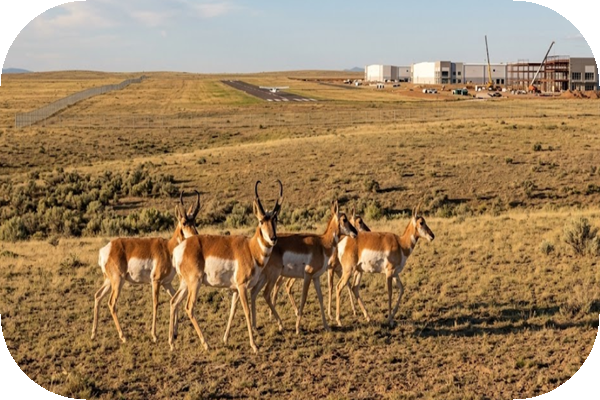
The Chino Valley Herd: A Quiet Life Under Threat
This photograph shows the Chino Valley Pronghorn herd—a species that relies on its open sightlines and unimpeded movement for survival.
Fulfilling the Need to Migrate: Unlike deer or elk, pronghorn almost never jump high fences; instead, they are designed to crawl under standard barbed-wire ranch fences.
The Impassable Barrier: An airfield security fence may be a chain-link wall that is impossible for them to navigate.
Habitat Fragmentation: The proposed development effectively bisects their home. This fragments their critical winter range, prevents them from accessing water sources, and isolates them from the genetic diversity of the main herd.
The Great Wall of Chino: Blocking the Pronghorn
Chino Valley is home to one of Arizona’s most iconic pronghorn herds. For generations, these “speed goats” have used the open grasslands of the Big Chino Valley as a critical migration corridor. The approved airfield doesn’t just bring noise; it brings a permanent barrier to their survival.
Why an Airfield Fence is a Death Sentence
Unlike a standard 3-strand ranch fence, an FAA-regulated airfield fence is designed to be impenetrable.
The Barrier: A 5,000-foot runway requires miles of high-security chain-link fencing to keep wildlife off the landing strip.
Phase 2–4 Impact: As the project expands into an industrial business park, the total fenced acreage will grow, effectively cutting the Chino Valley migration corridor in half.
The Corridor Conflict: According to the Arizona Game and Fish Department (AGFD), the Perkins Ranch area sits directly within a known movement zone. Blocking this path forces the herd toward the highway (SR 89), significantly increasing the risk of wildlife-vehicle collisions.
Action Steps for Wildlife Protection
Demand a Wildlife Study: The town approved this project without a current, comprehensive AGFD-certified wildlife movement study. Email the “Yes” voters and demand one.
Referendum Petition: The only way to stop the fence is to stop the project.
“Pronghorn are the species most impacted by habitat fragmentation due to unsuitably designed or placed fences.” — Arizona Game and Fish Department, Guidelines for Wildlife Friendly Fencing