Prop 410: Potential Impacts on Chino Valley Residents
The Human Cost
The Perkins Ranch proposal involves a privately owned and operated airfield and associated development on approximately 390 acres in Chino Valley. The Town approved the zoning change and a conditional use permit for the airfield and associated uses in February 2026. Proposition 410 concerns the zoning ordinance associated with that project.
The potential effects of the project extend beyond the airfield itself. Residents and community members have raised questions about aircraft operations, noise, traffic, water resources, wildlife, emergency services and the future character of the surrounding area. This page examines those issues and identifies where additional information and documentation are available.
For generations, the name “Perkins” has been synonymous with the ranching heart of Chino Valley. But with the February 2026 approval of the Embry-Riddle / Perkins Ranch Airfield, the “ripple effect” of industrialization is beginning to move through our town. This isn’t just about planes; it’s about the fundamental shift in our daily lives. See the Airport / Industrial Park Proposal for the project details behind these impacts and the Referendum & Election page for information about the public vote on the rezoning.
Prop 410: Potential Community Impacts
The Perkins Ranch proposal raises several distinct issues that can be considered separately. The following topics are addressed on this page and in related information elsewhere on Keep Chino Rural.
Aircraft Operations and Flight Activity
A private airfield is proposed as part of the Perkins Ranch development. Project materials describe aviation and flight-training activity as an initial use. The number, type and timing of aircraft operations are important factors when considering potential effects on nearby residents.
Noise
Aircraft operations can produce noise that differs from the existing sound environment in a predominantly rural area. The potential effect depends on factors such as aircraft type, flight paths, frequency of operations, time of day and proximity to homes.
Traffic and Roads
The proposed development could affect traffic patterns and road use in the surrounding area. The project’s access roads, vehicle traffic and future development phases are therefore relevant considerations when evaluating its potential community effects.
Water Resources
Water availability is an important issue for development in the Chino Valley area. The potential water demand associated with the proposed airfield and additional development should be considered alongside available water resources and applicable planning and regulatory requirements.
Wildlife and Open Space
The Perkins Ranch area and surrounding lands provide habitat for wildlife. Development and increased human activity can affect habitat, movement patterns and the use of open space. Wildlife-related information should be evaluated using documented studies and agency records where available.
Land Use and Community Character
The zoning change allows a substantially different range of uses than the property’s previous zoning designation. The proposed airfield and associated development therefore raise broader questions about future land use, surrounding property uses and the character of the area.
Prop 410 Air Traffic and Flight Operations
The proposed Perkins Ranch airfield is intended to support aviation activity, including flight training. The project description includes a paved runway approximately 5,000 feet long and 75 feet wide, along with aircraft parking, lighting, navigational equipment, vehicle parking and an access road.
Project materials have described substantial aviation activity as the development progresses. The potential effect of that activity on surrounding residents depends on factors including the number and type of aircraft, flight paths, operating hours, frequency of operations and the location of nearby homes.
The Town’s approval of the conditional use permit establishes the approved land use for a privately owned and operated airfield and associated uses. Specific operational characteristics should be evaluated using the applicable permit conditions, project documents and other official records rather than assumptions about how the airfield will ultimately operate.
For residents evaluating Proposition 410, the important distinction is between what has been approved, what the project proponents have proposed, and what may require additional approvals as later phases are developed.
Prop 410 Noise and Chino Valley
Aircraft noise is one of the issues residents may consider when evaluating the proposed Perkins Ranch airfield. Unlike occasional aircraft activity over a community, a flight-training operation can involve repeated takeoffs, landings and other aircraft movements.
The potential noise experienced by nearby residents would depend on factors such as aircraft type, flight frequency, flight paths, operating hours and weather conditions. The location of the runway and surrounding residential areas also affects where aircraft noise may be heard.
The project’s potential noise effects should be evaluated using documented information about the proposed operation, applicable permit conditions and any available noise studies or other technical information. Where a specific noise claim is made, the supporting source should be identified so readers can distinguish documented information from estimates or projections.
For Chino Valley residents, the issue is not simply whether aircraft make noise. The relevant questions include how frequently aircraft would operate, what types of aircraft would be used, where flights would occur, when operations would take place and how those activities could affect nearby properties and the surrounding community.
Prop 410 and Water Resources
Water resources are an important consideration for development in the Chino Valley area. The Perkins Ranch proposal includes an airfield as well as additional development phases, so the potential water requirements of the overall project are relevant when evaluating its future impacts.
The amount of water ultimately required would depend on the size and type of development that occurs, the number of people working or visiting the site, landscaping and other site uses, and the water systems and conservation measures used.
The Town’s zoning approval and conditional use permit address land use and the proposed airfield, but those approvals should not be treated as a determination of the project’s ultimate water consumption. Specific water-use questions should be evaluated using applicable water studies, development plans, permits and other official records.
For residents considering Proposition 410, an important question is how future development at Perkins Ranch could affect water demand in an area where water availability and long-term groundwater management are already significant community concerns.
1. The Death of the “Soundscape”
Chino Valley residents have long traded “city convenience” for the rare gift of silence. The proposed 5,000-foot runway brings a permanent change to our environment:
- The Disruption: With projections of up to 40 operations per hour, the constant hum of training aircraft (Cessna 172s and Diamond DA42s) will shatter the peace of nearby residential areas and spiritual retreats like the Garchen Buddhist Institute.
- The Human Cost: Science shows that chronic environmental noise increases stress and anxiety. For us, it’s the loss of the “quiet morning” on the porch—a spiritual and mental health tax on every resident within the flight path.
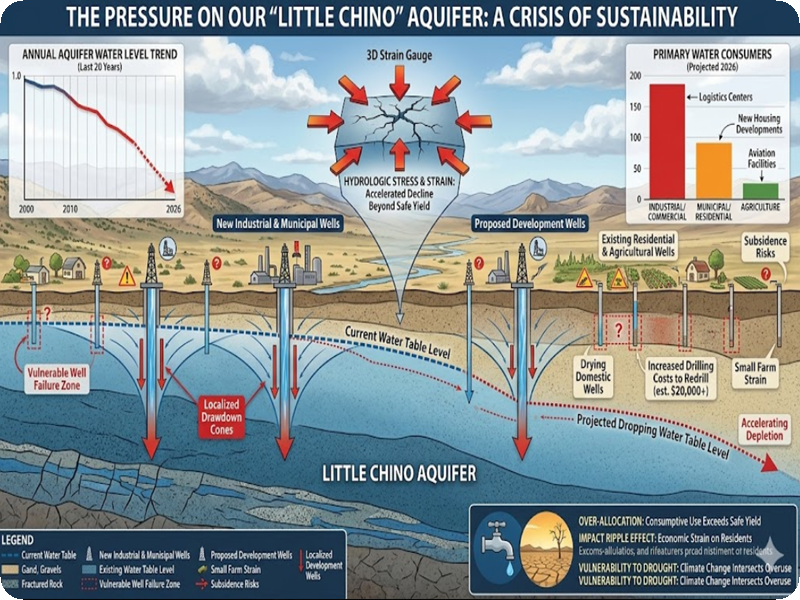
2. The Pressure on Our “Little Chino” Aquifer
Industrialization requires more than just land; it requires our most precious resource: Water.
- The Ripple: While the airfield itself has specific limits, the broader industrial rezoning of 390+ acres creates a new, permanent draw on the Little Chino Aquifer.
- The Fear: As water levels in the basin continue to show negative trends, rural families on the margins of the aquifer face a terrifying reality: drying wells. When industrial projects are prioritized, the “ripple” ends at the kitchen taps of local families who cannot afford to redrill hundreds of feet deeper.
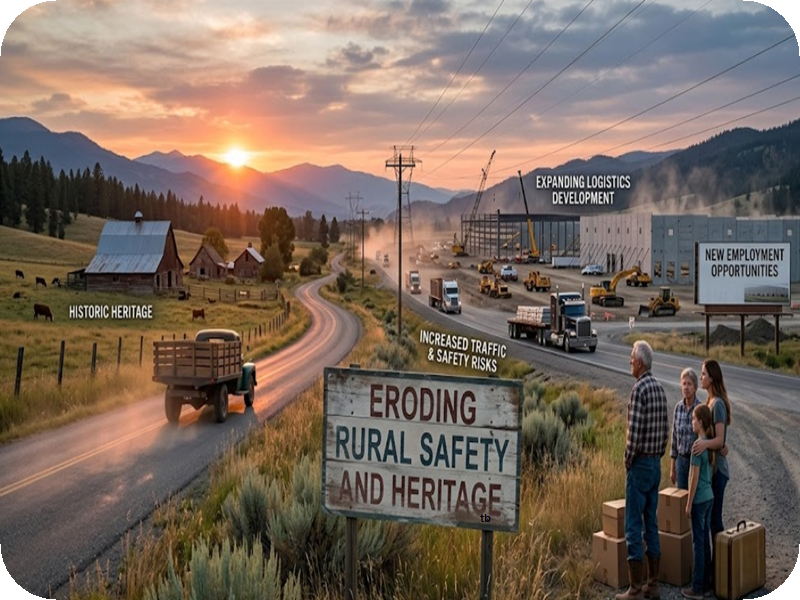
3. The Erosion of Rural Safety and Heritage
The Perkinsville Road corridor was built for ranching, not for a high-traffic aviation and research hub.
- Roadway Conflict: The shift from cattle crossings to construction crews and campus commuters creates a safety ripple. Our local infrastructure—and our volunteer-based emergency services—will be stretched to accommodate a private facility that doesn’t necessarily serve the local taxpayer.
- Cultural Loss: Perkins Ranch represents a tangible link to the Fred Harvey Farm and Arizona’s railroad history. Replacing “Grama Grass” vistas with hangars and fuel farms is a permanent “human cost”—once that heritage is paved, it can never be reclaimed for our children.
4. The Precedent: What’s Next?
The most dangerous ripple is the precedent. By allowing industrial-scale operations in areas designated for “Ranch/Agricultural” use in the 2040 General Plan, we are telling developers that Chino Valley’s soul is for sale.
Why We Stand Together
This fight isn’t against progress; it’s against the industrialization of our identity. We are a community of neighbors who value the horizon, the silence, and the security of our water. We believe the “Human Factor” should outweigh the “Industrial Benefit.”
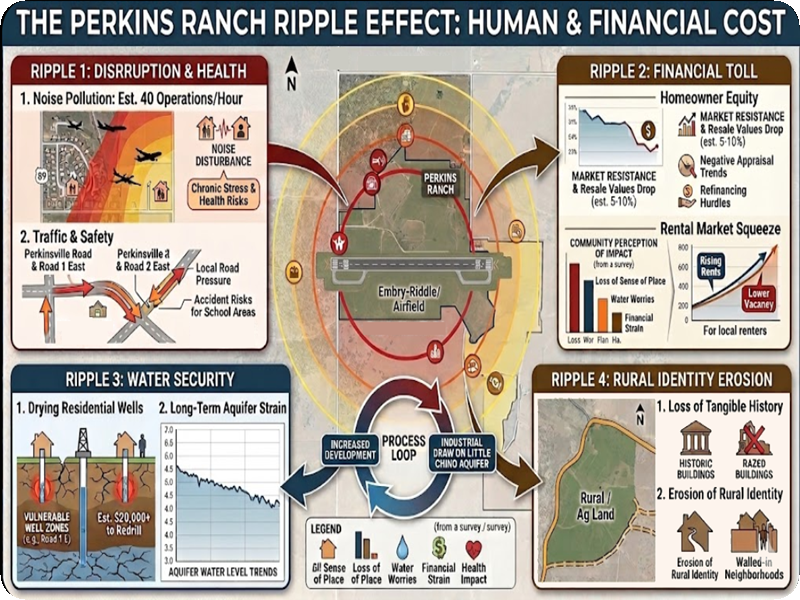
The Perkins Ranch Ripple Effect: The Human and Financial Cost
The proposed industrialization of the Perkins Ranch area—stretching along East Perkinsville Road between State Route 89 and the Peavine Trail—is more than a zoning change. It is a fundamental shift in the “Quiet Enjoyment” and financial security of Chino Valley residents.
1. The Disruption of Home Life
The “Human Factor” starts with the loss of the peace we moved here for. The development sits at the doorstep of established neighborhoods along North Road 1 East and the MA Perkins Trailway.
- The Soundscape: The February 2026 Town Council presentation confirmed that flight training operations from the Embry-Riddle airfield could reach 40 operations per hour. This constant overhead noise creates a “noise tax” on families in the Perkinsville 44 subdivision and surrounding rural properties.
- Safety & Traffic: As industrial activity increases, the intersection of Perkinsville Road and Road 1 East—already a primary route for local traffic—will face a “ripple effect” of construction crews and campus commuters, stretching our local emergency services and changing the safety profile of our residential streets.
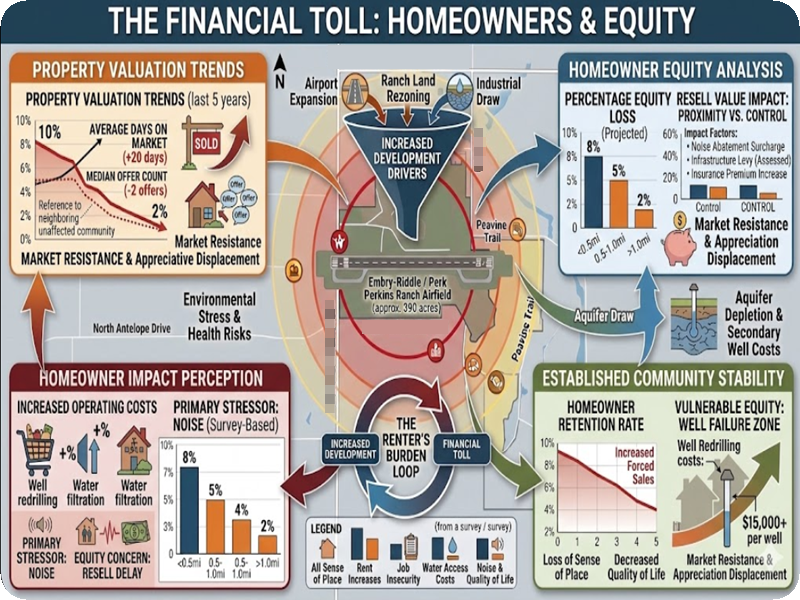 2. The Financial Toll: Homeowners & Equity
For many Chino Valley homeowners, their house is their largest asset. Industrialization in a rural zone typically triggers a “Market Resistance” ripple:
-
- Resell Value: Buyers looking for a “rural lifestyle” often avoid homes near active airfields or industrial hubs. Real estate data shows that “Incompatible Land Use” (like an airfield next to a 2-acre lot) can suppress property value growth compared to purely residential zones.
- Refinancing Hurdles: As the area’s “highest and best use” shifts toward industrial, residential appraisals can become volatile. This makes it harder for homeowners to tap into equity for home improvements or medical expenses.
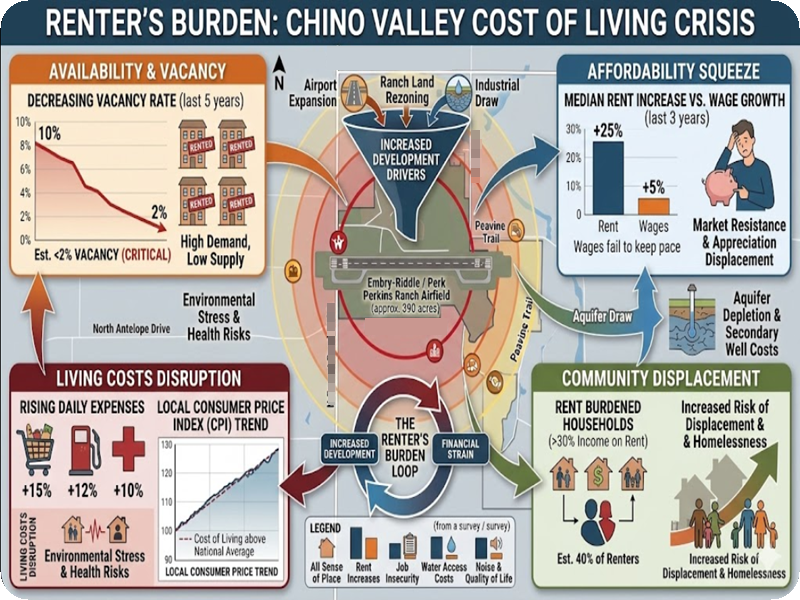
3. The Renter’s Burden: Cost of Living
Industrialization often promises “jobs,” but the ripple effect for renters is rarely positive:
-
- Rent Hikes: In 2026, Chino Valley’s cost of living is already 16% higher than the national average. New research campuses can drive up demand for local housing, pushing rents higher for existing residents who are already “cost-burdened” (spending more than 30% of their income on housing).
4. The Water Connection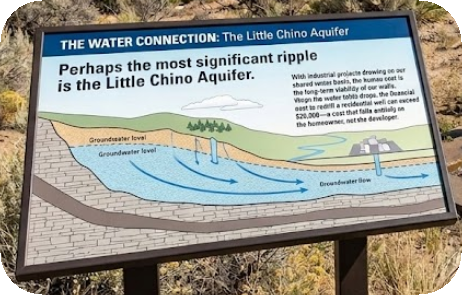
Perhaps the most significant ripple is the Little Chino Aquifer. With industrial projects drawing on our shared water basin, the human cost is the long-term viability of our wells. When the water table drops, the financial cost to redrill a residential well can exceed $20,000—a cost that falls entirely on the homeowner, not the developer.
Prop 410, Wildlife and Habitat
The Perkins Ranch property is part of a larger rural landscape that provides habitat and movement areas for wildlife. Development can affect wildlife through changes to habitat, increased human activity, lighting, vehicle traffic and other changes to the surrounding environment.
The potential effects depend on the specific development footprint, construction activity, aircraft operations, roads, lighting and other uses that ultimately occur on the property. Different species can also respond differently to changes in habitat and human activity.
Wildlife impacts should therefore be evaluated using documented biological information, agency records and project-specific studies where available. Claims about particular species or impacts should be supported by identifiable sources.
For additional information about wildlife potentially affected by development in the area, see Other Affected Wildlife.
Prop 410, Roads, Traffic and Infrastructure
The Perkins Ranch proposal includes an airfield and additional development phases, which could increase vehicle activity in and around the project area. The potential effects on roads and traffic depend on the amount and type of development that ultimately occurs, the number of employees and visitors, construction activity, and the routes used to access the property.
The project description includes an access road and vehicle parking as part of the airfield development. Future phases described for the project include additional facilities and development that could generate additional vehicle trips.
Road and traffic impacts should be evaluated using the project’s approved plans, traffic information, applicable Town requirements and other available technical documents. Actual traffic conditions may differ depending on how much of the proposed development is ultimately constructed and occupied.
For Chino Valley residents, relevant questions include how project traffic would connect to existing roads, whether improvements would be required, how construction traffic would be managed, and how future development could affect traffic in the surrounding area.
Prop 410, Land Use and Community Character
The Perkins Ranch proposal represents a change in the potential use of the property. The Town’s February 2026 zoning ordinance changed approximately 390 acres from Single Family Residential zoning, with a 2-acre minimum lot size, to Agricultural Residential zoning, with a 36-acre minimum lot size.
The zoning change is important because zoning determines which types of land uses may be considered on a property. The conditional use permit separately addresses the proposed privately owned and operated airfield and associated uses.
The proposed development includes aviation facilities as well as additional industrial, research, office, commercial and manufacturing uses described in the project’s later phases. The scale and type of development that ultimately occurs will depend on the applicable approvals and development requirements.
For residents evaluating Proposition 410, the land-use question extends beyond the runway itself: What types of development could occur on the property, how would those uses fit with surrounding land uses, and what changes could result from development of the site?
Sources and Project Documents
Information about the Perkins Ranch proposal and Proposition 410 comes from a combination of Town records, project documents and community research. Readers should consult the underlying documents when evaluating specific claims about the project.
Key official records include the Town of Chino Valley zoning ordinance associated with the Perkins Ranch property and the Town’s conditional use permit resolution for the privately owned and operated airfield.
Where information on this site describes a projected future condition, estimate or potential impact, it should be understood as an analysis or projection rather than a statement that the outcome is certain. Where possible, specific claims should be accompanied by links to the underlying source document.
Our Standing
We are not just protecting land; we are protecting our investment, our health, and our future. The industrial benefit to a few should not come at a permanent financial and emotional cost to the many.
Related Proposition 410 Information
For additional information about Proposition 410 and the issues surrounding the Perkins Ranch proposal, see:
- Perkins Ranch Airfield and Proposition 410 — project background, the proposed airfield and development phases.
- Land Use — information about land-use issues and the proposed development.
- Other Affected Wildlife — additional information about wildlife and habitat.
- Rebuttal — responses concerning Proposition 410.
- Events & Meetings — meetings and events related to the issue.
- Proposition 410 / Referendum & Election Information — referendum and election information.